Found 271 results in 2 milliseconds.

Product

myOSLautomatic 50

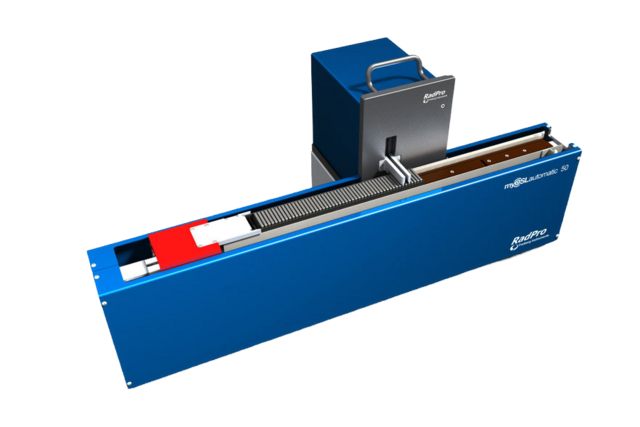
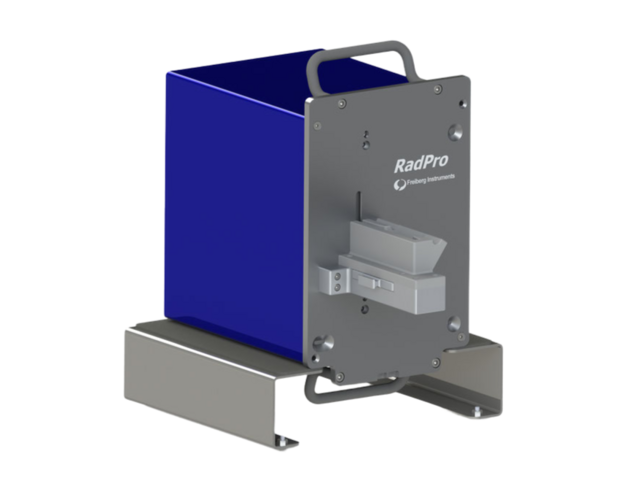
Skip breadcrumb navigation Breadcrumb Freiberg Instruments Products Luminescence Dating and Dosimetry myOSLautomatic myOSLautomatic 50 myOSL automatic 50 The myOSLraser 4.0 can easily be upgraded to an automatic system to process 50 dosimeters per loading Exclusively through RadPro International Contact for demo Skip menu Quick navigation Features Software Contact Features & Benefits The myOSLraser 4.0 can easily be upgraded to an automatic system to process 50 dosimeters per loading. It comes with 10 magazines which can be loaded with 50 myOSL dosimeter each. myOSLautomatic 50 – Exclusively through RadPro International This product is distributed by our trusted partner. Contact for demo Software OSLdosimetry OSLdosimetry is a user friendly operating software which allows OSL dose measurements as standard user or calibration and setting features for professionals (password protected). The… Learn more myOSLautomatic 50 – Exclusively through RadPro International This product is distributed by our trusted partner. Contact for demo

Page

Dr. Viktoriia Nikonova

Dr. Viktoriia Nikonova Product Manager - Surface Photovoltage Spectroscopy My role at Freiberg Instruments: Improve, refine, optimize. Dr. Viktoriia Nikonova Product Manager SPV/SPS Viktoriia has been contributing her expertise in surfaces for over a year. She researches and works on innovative methods to precisely analyze the surfaces of materials in order to make defects and qualities visible. Viktoriia, what was your first point of contact with Freiberg Instruments? I came across a job advertisement online and was invited to an interview after a short call. I was immediately impressed by the atmosphere, even though it was rather quiet on the day. I also had the opportunity to see Freiberg beforehand - the historic city center immediately captivated me with its charm. Why did you choose Freiberg Instruments? It was the first time that a job really matched my training. I immediately had the feeling that I could actively contribute my experience here. The team has broad expertise in the product development of measuring instruments - from hardware to software. So you can really make a difference. What are you working on at Freiberg Instruments? I am working on the Surface Photovoltage (SPV) method for our measuring instruments. This technique is one of the most advanced methods for analyzing semiconductors and other photoactive materials. It allows us to quickly and efficiently check surface qualities and defects in various materials - including highly doped materials and epi-layers. Your role at Freiberg Instruments in three words? Improve, refine, optimize. Your best moment at Freiberg Instruments? Definitely when I was on site with a customer to install our system. The support from the whole team was great and it felt really good. How does Freiberg Instruments support your professional development? FI gives me the opportunity to combine my scientific work with tasks that are important for the industry - that means a lot to me and helps me move forward. Viktoriia is Driven by Innovation Let's drive innovation together Current job openings Get to know the team Dr. Christian Hagendorf Projekt- & Key Account Manager XRD Series Learn more Martin Ferkinghoff Head of Service Learn more Marcus Richter Application & Service Engineer XRD Learn more Burkhard Winkler Senior Sales Engineer for semiconductors and automation Learn more Diana Trinks Assistant to the management Learn more Marcus Göhler Head of Electronics Development Learn more Thanga Kumar Global Sales Director Learn more Dr. Nadine Schüler Head of Research and Development Learn more

Page

myOSL blister holder

Skip breadcrumb navigation Breadcrumb Freiberg Instruments Products Luminescence Dating and Dosimetry myOSLraser myOSLraser 2.0 myOSL blister holder myOSL blister holder A blister which protects the OSL dosimeter against water, dust and dirt. Interested? Get in touch! Contact now Another whole body badge solution is the myOSL dosimeter sealed in a blister which protects the OSL dosimeter against water, dust and dirt. It also provides the possibility to add a label on the front and rear side of the OSL blister which can show the information of the wearing person like name, department, wearing period, etc. The myOSL dosimeter is also protected against unauthorized opening of the dosimeter which could influence the dose results (double-protection). Get in touch Do not hesitate to contact us – we are available to assist you with any inquiries or requests. Use our inquiry tool or reach out via email: sales @ freiberginstruments.com

Page

myOSL dosimeter holder

Skip breadcrumb navigation Breadcrumb Freiberg Instruments Products Luminescence Dating and Dosimetry myOSLraser myOSLraser 2.0 myOSL dosimeter holder myOSL dosimeter holder The smallest OSL whole body dosimeter on the market. Interested? Get in touch! Contact now The myOSL dosimeter is probably the smallest OSL whole body dosimeter on the market. It contains two Beryllium Oxide detectors which are used for Hp(10)/deep dose and Hp(0.07)/skin dose. Beryllium Oxide (BeO) is a perfect OSL materials with high dosimetry characteristic. BeO is tissue equivalent and therefore highly suitable for personal dosimetry. The holder can be equipped with a crocodile clip to attach the dosimeter to your coat pocket. A depression provides space for a label which can include: a name wearing period barcode company logo etc. Get in touch Do not hesitate to contact us – we are available to assist you with any inquiries or requests. Use our inquiry tool or reach out via email: sales @ freiberginstruments.com

Technology

OSLdosimetry

OSLdosimetry OSLdosimetry is a user friendly operating software which allows OSL dose measurements as standard user or calibration and setting features for professionals (password protected). The OSLdosimetr y software provides individual dosimeter sensitivity calibration which makes the dose reading very precise. Additionally it include the history of OSL dosimeters e.g. OSL life time dose number of OSL readings last OSL read out etc. Get in touch Do not hesitate to contact us – we are available to assist you with any inquiries or requests. Use our inquiry tool or reach out via email: sales @ freiberginstruments.com

Product

myOSLraser 4.0

Skip breadcrumb navigation Breadcrumb Freiberg Instruments Products Luminescence Dating and Dosimetry myOSLraser myOSLraser 4.0 myOSL raser 4.0 Most modern OSL system which is growing with your needs Exclusively through RadPro International Contact for demo Skip menu Quick navigation Features Options Software Contact Features & Benefits The myOSLraser 4.0 is the basic unit of our 4 element dosimetry system which we offer. It is an automatic reader with a loading capacity of one dosimeter.It processes 4 element dosimeter or single elements which are used for extremity or eye lens dosimetry. The myOSLraser is a compact, easy to use and high quality system. It combines the reading and erasing process in one system to keep a high workflow. The myOSLraser 4.0 can be upgraded with an automatic unit with a loading capacity of up to 50 dosimeter (see myOSLautomatic 50) or up to two myOSLraser 4.0 can be installed in the myOSL 4000 which has a loading capacity of 3500 dosimeters (with sorting option) or 4000 dosimeters (without sorting option). myOSLraser 4.0 – Exclusively through RadPro International This product is distributed by our trusted partner. Contact for demo Accessories & Options 4 Element Dosimeter Interested? Get in touch! Learn more OSL single detector Interested? Get in touch! Learn more OSL Extremity and Eye lens dosimeter Interested? Get in touch! Learn more Software OSLdosimetry OSLdosimetry is a user friendly operating software which allows OSL dose measurements as standard user or calibration and setting features for professionals (password protected). The… Learn more myOSLraser 4.0 – Exclusively through RadPro International This product is distributed by our trusted partner. Contact for demo

Product

Angle Sorter

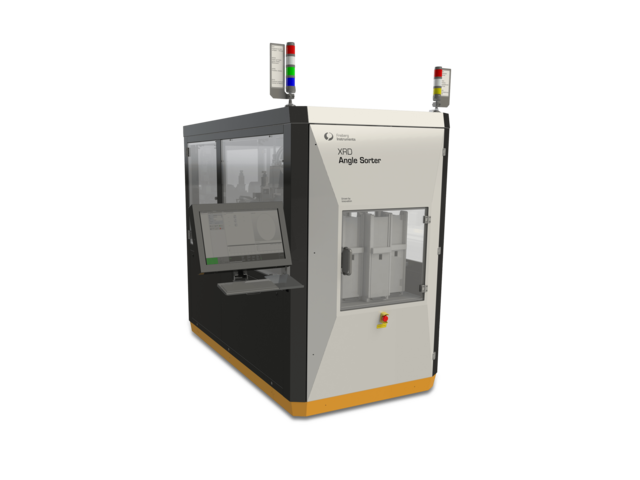
Skip breadcrumb navigation Breadcrumb Freiberg Instruments Products X-ray Diffraction Angle Sorter Angle Sorter This product launching soon Interested? Get in touch! Contact now Skip menu Quick navigation Applications Technology Contact Applications Automatic Wafer Sorting To ensure the exceptional performance required for semiconductors, every wafer must undergo thorough testing. The Omega-Scan method, known for its speed and precision, is ideal for fully… Learn more Interested? Our experts are happy to assist you. Get in touch! Contact us now! Technologies Omega-scan Ultra-Fast Orientation Measurement for Single Crystals Learn more Theta-scan Precision X-ray Method for Single Crystal Orientation Learn more Get in touch Do not hesitate to contact us – we are available to assist you with any inquiries or requests. Use our inquiry tool or reach out via email: sales @ freiberginstruments.com

Page

Technical Support

Technical Support We're Here to Help Our expert team is ready to assist you with any technical issues – big or small. With remote support, fast repairs, and local-language assistance, we minimize downtime and keep your systems running smoothly. Use our inquiry tool or reach out via email: support @ freiberginstruments.com Our Support Remote Assistance Quick troubleshooting and guidance via phone, email, or remote access. Fast Repairs & Maintenance Swift service to restore your device’s functionality as soon as possible. Local-Language Support Assistance in multiple languages to ensure clear and efficient communication. Spare Parts & Upgrades Genuine components and system enhancements to keep your instruments up to date. Fast, reliable support makes all the difference. Our goal is to keep your systems running smoothly so you can focus on what matters most– your results. Martin Ferkinghoff Head of Service Discover more Products Learn more Solutions Learn more Company Learn more

Page

Luminescene dating, research, dosimetry

Luminescene dating, research, dosimetry Our R&D projects RAMSES-4-CE 04/2020 - 03/2024 Raman Absorption and eMission Spectroscopy in an intEgrated Sensor Circular Economy As a follow-up to the very successful InSPECtor project, Freiberg Instruments is developing a Raman sensor in this project. Together with the partner Helmholtz center Rossendorf HZDR and TU Bergakademie Freiberg and the Geological Survey of Finland GTK, the sensor will be implemented in a spectroscopy-based multi-sensor system for the recycling and re-mining industry. We focus on (1) the development of a Raman sensor unit, (2) the integration into the already developed LiF-HSI sensor system (inSPECtor) and (3) advanced data processing including multi-source data fusion and machine learning. The core innovation contributes to the digitalization of recycling streams. It allows for the identification of critical raw materials as well as energy stored in plastics as key inputs for simulations of energy and material cycles required for the transition towards a Circular Economy. Automated Lithium-Fluorid OSL Low-Dose-Measurement (ALFON) 2020/12/01 - 2021/11/30 The increasing use of ionising radiation in medical application (CT/X-ray; treatment) and other aspects of modern societies (radiation facilities, power plants), requires the active and passive measurement of radiation. This is paired with more and more stringent regulations on monitoring of radiation exposure and levels. Passive dosimeters are the most widespread and cheapest way to monitor the exposure to ionising radiation of large numbers of people. However, the widely used technique of film dosimetry was replaced by thermally stimulated luminescence (TL), which in turn is now out-phased in personnel dosimetry and slowly replaced by optically stimulated luminescence (OSL). New techniques require the development of new automated measurement equipment, e.g. myOSLraser. Especially dosimetry services, which are handling thousands of dosimeters every day, are faced with large costs of such transitions to new techniques, which are required to keep up with legislation and developments. This is accounted for in the ALFON project by the development of a 4-element OSL-dosimeter, which is shaped like the widespread used Panasonic 4-element TLDs, and thus will allow the continued use of peripheries for Panasonic TL-dosimetry with UD-readers in existing facilities. The artificial phosphors BeO and LiF are providing radiation responses close to human tissue and are therefore the material of choice in personnel dosimetry. The project aims to provide dosimeters and measurement equipment exceeding the requirements of EN/IEC 62387, especially on the detection of very low radiation doses. This will be the first commercial use of the new OSL material based on LiF (Sadel et al., 2019), and its favourable properties paired with the possibilities of 4 measurement positions in a single dosimeter, which opens many possibilities beyond the measurement of Hp0.07 and Hp10. In addition to develop optimized measurement conditions of the new material, the capacities for OSL-measurement are scaled up from the my OSLraser 2-element BeO reader (200 dosimeters), with automations for 500 and 4000 dosimeters. This requires 3-axle feeding mechanisms and a parallel line for dosimeters not meeting user or regulatory specifications, which have to be sorted out for inspection or re-measurement. The option to measure the same dosimeter again is special in OSL-dosimetry and not possible in TL-dosimetry, thus fulfilling the legal requirements in some countries.. The 2-element OSL-reader 'myOSLraser' for BeO is used as the basis of the development of the larger 4-element equipment. Reference: Sądel M, Bilski P & Kłosowski M (2019) Optically stimulated luminescence of LiF:Mg,Cu,P with different dopant concentrations. Radiation Measurements 123, 58-62. SISor - Sensor for Intelligent Sorting 2018/05/01-2020/04/30 The separation of waste, especially from electronic and electric devices (WEEE) is a topic, which has drawn a fast-growing interest on a global scale. Due to decreasing availability and rising production costs for raw materials such as rare earth elements (REEs) and precious metals, the mining of secondary resources from waste gained extremely in importance. In 2016, 44.4 million metric tons of e-waste were generated globally, an amount which is expected to increase steadily for the next decades. Within the SISor (Sensors for Intelligent Sorting) project the core aim is the development of an integrated sensor system for the automated detection of raw materials in the WEEE. An improved detection of valuable materials such as Au, Cu and rare earth elements would strengthen the sorting process of the e-waste, increasing the separation success tremendously. The consortium of the Helmholtz institute HZDR-HIF, the Canadian company Telops Inc. and Freiberg Instruments is going to develop a modular system, containing sensors based on hyperspectral mid-wave infrared (HS-MWIR) absorption spectroscopy and laser-induced fluorescence (LIF) emission spectroscopy. Both techniques are high-sensitive, non-invasive and can be optimized for fast-imaging. Thus, larger streams of recyclates could be processed more accurately in shorter time. This project is funded by the BMWi . inSPECtor - integrated Spectroscopy Sensor System The core aim of this project is to gather the respective partner competences to upscale an innovative product based on emission and absorption spectroscopy able to identify and map critical elements as rare earth elements in primary resources as drilling cores and secondary products. YouTube Here you can find external content of the provider Google LLC. To be able to display these, we need your consent. privacy policy Show provider content inSPECtor – integrated Spectroscopy Sensor System Development of measurement equipment for OSL-dosimetry with BeO 2016/03/15 - 2018/09/14 Personnel working in environments with potential exposure to artificial or increased radiation, like hospitals with CT/X-ray equipment, nuclear power plants, radiation facilities, etc., are required to be monitored for their radiation exposure. The availability of film material, which is one of the most important materials in such personal dosimetry, is not warranted on the long term. Other materials have been sought as possible replacements. The dependency of sintered BeO to radiation energy is close to tissue. Because of this favourable property, BeO is one of the phosphors of choice in personal dosimetry. Combined with the technique of Optically Stimulated Luminescence (OSL) for readout, BeO-OSL dosimetry is believed to supersede film dosimetry and at least to some extend thermoluminescence (TL) dosimetry. The projects aims towards the development of OSL-equipment (EN/IEC 62387) to efficiently read out a new 2-element BeO-OSL dosimeter (Hp07 and Hp10). The modular equipment provides the manual readout of a single BeO-dosimeter. An automation attachment provides the opportunity to measure batches of 20 dosimeters stored in magazines. A total of 10 of such magazines are located in a wheel, which is software driven for dosimeter measurement according to user definitions. In OSL dosimetry it is sufficient to measure part of the signal, which allows re-reading, for dose determination. This usually requires the zeroing before a dosimeter can be used again. Instead of a separate device the bleaching to zero will be achieved within the OSL-reader, which speeds up the process. For calibration purposes a special beta source for irradiation of the dosimeters is constructed. Some application require on-site immediate analysis (e.g. in a phantom) and dose determination. This will be achieved by a single-element BeO-OSL equipment, which is handheld and can be independently operated from batteries, providing immediate dose assessment. Reference Bos AJJ (2001) High sensitivity thermoluminescence dosimetry. Nuclear Instruments and Methods in Physics Research B 184, 3-28. READ 2016/06/01 - 2019/05/31 READ - R are EA rth ceramic phosphors for 3D optical readout D osimetry Dosimetry for radiation processing applications, as used e.g. in sterilization procedures for medical devices, is often tedious due to the constraints of quality assurance and fulfillment of the required standards (e.g. ISO 11137, ISO/ASTM 51204, 51608, 51649, …). It is moreover time consuming. As an industrial application it is desired to release irradiated products as quickly as possible. The project aims at the development of a handheld measurement device, which will provide instant dose information for user defined numbers of dosimeters attached to the product/product pallet, which will allow the immediate release if the specified requirements are met. While this can provide 3-D dose information based on the selected measurement spots, more details are sometimes required for product objects of very complex geometries, where it is essential to verify the dose at positions where dosimeters cannot be attached. For this purpose, a dosimeter material which can be sprayed onto surfaces and measured with a 3D-dose-scanner will be developed. The dosimetric properties of doped NaYF4 will be employed to develop dosimeters as labels and as spray. These ceramic phosphors exhibit an upconversion effect, denoting the transformation of long-wavelength (infrared or near-infrared) light into short-wavelength radiation (luminescence) with higher photon energy. Here, a dependency of the lifetime of the luminescence with dose (Figure 1) has been shown (Härtling et al., 2012; Reitzig et al, 2013; 2016). This allows the use of a broad dose range of few kGy to 150 kGy (Figure 2). Its high stability under ambient conditions corroborates the application of the material for industrial dosimetry, where the dose information is retained and readout is contactless. These properties make the material a promising candidate for optical dosimetry below 5 kGy, a dose range addressed so far only with more complex non-optical systems. Publication Christiane Schuster, Florent Kuntz, Alain Strasser, Thomas Härtling, Kay Dornich, Daniel Richter 3D relative dose measurement with a μm thin dosimetric layer, Radiation Physics and Chemistry, 2020,109238, ISSN 0969-806X Keywords: High dose dosimetry, Optical dosimetry, gamma irradiation, Electron beam irradiation, X Ray irradiation, ceramic phosphors, luminescence decay time, industrial radiation processing. Fig 1: Luminescence lifetime reduction after a 300 kGy electron irradiation (from Reitzig et al., 2016). Fig 2: Dose dependency of the luminescence lifetime of NaYF4 (from Reitzig et al., 2016). References Härtling, T., Reitzig, M., Mayer, A., Wetzel, C., Röder, O., Schreiber, J., and Opitz, J. (2012). Nondestructive testing of electron beam sterilization by means of an optically active marker material. In "Optical Components and Materials IX." pp. 825713-825713-6. Proceedings SPIE 8257. Reitzig, M., Goodband Rachel, J., Schuster, C., and Härtling, T. (2016). Optical electron beam dosimetry with ceramic phosphors as passive sensor material for broad dose ranges. tm - Technisches Messen 83, 171-179. Reitzig, M., Härtling, T., Winkler, M., Powers, P., Derenko, S., Toro, C., Röder, O., and Opitz, J. (2013). Time-resolved luminescence measurements on upconversion phosphors for electron beam sterilization monitoring. In "Smart Sensor Phenomena, Technology, Networks, and Systems Integration." (K. J. Peters, W. Ecke, and T. E. Matikas, Eds.), pp. 86930R-86930R-7. Questions? I'm here for you. Dr. Nadine Schüler Head of Research & Development +49 3731 419 540 LinkedIn profile Contact now Discover More Solutions Crystal Growth and Processing Learn more Epitaxial Layers & Thin Films Learn more Photovoltaic Learn more Luminescence Dating and Dosimetry Learn more
Page

Electrical semiconductor characterization

Electrical semiconductor characterization Our R&D projects SPV-4-UWBG – Development of Surface Photovoltage for ultra-wide bandgap semiconductors 2025/06/01 – 2027/12/31 The goal of this project is to establish the SPV measurement method for the first UWBG semiconductors, such as aluminum nitride, evaluate the method's validity, and interpret the measurements using alternative analysis techniques. Theoretical simulations will be performed to help to better understand the physical principles of the measurement principle. PERLE – Perovskite Tandem Solar Cells: Metrology for the PV Industry 2024/05/01 – 2027/04/30 In this project new methods for the inline characterization of Tandem solar cells based on MDP and SPS measurements are developed. Freiberg Instruments is working together with several research institutes and companies in this project to strengthen the German photovoltaic industry. Different layers and stacks of Perovskite and silicon are investigated and characterized. TemCrysT – GaN-Templates, GaN-Crystals and GaN-Wafers for the Development of GaN-Transistors 2023/07/01 – 2026/03/06 The aim of this project is to an automated characterization method for process control of GaN based on Raman measurements. This project aims to secure and expand the competitiveness of the semiconductor location Freiberg. For this purpose, Freiberg Instruments will develop a demonstrator for a fully automated confocal Raman measurement. This is used to analyze residual stresses, which naturally occur in the crystals due to the hetero-epitaxy process used. In this way, excellent feedback should be achieved along the entire process chain. In addition, the MDP method (microwave-detected photoconductivity), which has been established for silicon up to now, is to be applied to large HVPE GaN crystals for the first time and the possibilities of defect analysis on this material are to be researched and demonstrated. Furthermore, the capabilities of the newly developed SPV spectrometer (surface photovoltage) are to be adapted to GaN so that this device can be used for material characterization. G12 – Silicon mono-wafer development from M2 to G12: Cell geometries of the future 2022/04/01 – 2025/03/31 Development of the MDP lifetime measurement technology for monocrystalline bricks with a format of up to 210 x 210 mm The main goal of the "G12" project is the process and technology development of ingots and wafers with large format (formats (182x182 mm, 210x210 mm, possibly even 240x240 mm). The production of large ingots and large wafers requires further development of the crystallization systems, the process control, the mechanical processing of the ingot and bricks and ultimately also the qualification tools for the manufactured bricks and wafers. The focus of the sub-project at Freiberg Instruments is on the further development of lifetime measurements using MDP technology for large brick formats. Semicon 2021/03/01 – 2024/02/29 In this project a fast, contactless characterization tool based on THz is developed for the measurement of doping density, sheet resistance and layer thickness of thin semiconductor layers. SALSA – Measurement technology and sensitivity analysis for charge carrier selective solar cells 2021/04/01 – 2024/03/31 In the "SALSA" project, the inline measurement technology required for quality assurance and process control as well as quality assurance concepts are to be developed, optimized and techno-economically evaluated especially for progressive solar cell technologies such as the heterojunction route and the TOPCon route. The focus of Freiberg Instruments is on further development of their inline lifetime measurement abilities using MDP for HJT and TOPcon technology. The main tasks are: System optimization for TopCon and HJT (inline - MDPlinescan , offline - MDPmap ) Identification of suitable excitation conditions in different manufacturing stages (TOPCon / HJT) Detectability of defects in selected process stages Development of a concept for an optimized MDPlinescan system SPV – Development of a surface photovoltage spectrometer for the characterization of photoactive materials 2021/01/01 – 2022/12/30 So far, there are no universally applicable compact SPV spectrometers (SPV: surface photovoltage) available on the market with which practically any photoactive materials and semiconductors can be examined. The aim of this project is to develop a compact SPV spectrometer. With the help of our innovative SPV spectrometer and the measurement set-up for which a patent has been applied, charge separation, electronic transitions and diffusion lengths should be characterized contactless and with unprecedented sensitivity over a very broad spectral range from deep UV to near infrared. In accordance with the complementary strengths of the project partners, the focus of Freiberg Instruments is on device development and production of the demonstrator, of HZB on method development, development of critical components, validation and tests, and HZG on simulation and development of analysis and simulation software for SPV. Technology transfer PIDcon bifacial 2020/07/01 – 2020/12/31 In this project, the novel technology for testing bifacial solar cells for their sensitivity to potential-induced degradation ( PID ) is to be transferred from the Fraunhofer Center for Silicon Photovoltaics CSP to Freiberg Instruments GmbH and adapted into a marketable product. The Fraunhofer CSP has applied for a patent for a novel process (process and arrangement for testing solar modules or solar cells for potential-induced degradation) and will transfer this knowledge to Freiberg Instruments. This project is funded by SAB and the EU. QualiZell mess-ODNP 2019/11/01 – 2021/10/30 In cooperation with the technical university Bochum, Freiberg Instruments is developing a tool for ODNP measurements, a combination of EPR and NMR for the investigation of water dynamics and protein function. This project is funded within the ZIM network “Qualitätskontrolle Zelltherapie” (https://www.qualitaetskontrolle-zelltherapie.de/) by ZIM and the German government. µTHIN 2019/09/01 – 2021/08/31 The objective of this project is to develop a sensor for sheet resistance measurements on thin films of e.g. GaN on Si via microwave detection. Furthermore, the MDP technology will taken to its next level concerning the time resolution, sensitivity and mapping possibility at different temperatures. The project partner the technical university Freiberg, is correlating the results of the new sensor and the improved MDP with PL and Raman measurements to gain new insights in the interpretation of the measurements results. This project is funded out of the EFRE fond of the EU. Omega-Scan 2018/01/01 – 2020/12/31 Advancement of Omega-Scan technology for different applications Freiberg Instruments is further advancing its Omega-Scan technology for orientation of single crystals for different applications as orientation of diamond and other wide bandgap semiconductors, epitaxial layers, turbine blades and quartz. The project is funded by the SAB and the EU. PIDrecovery 2018/01/01 – 2020/12/31 Freiberg Instruments takes part in a project with the goal to develop a method to predict PID recovery and hence the efficiency of a module. Freiberg Instruments is further developing its tool PIDcheck for the PID test of modules in free field and its recovery. The project is funded by BMWi . Smart3 | materials – solutions – growth 2017/05/01 – 2020/04/30 Smart processes – process technology for smart materials MSM-production and material characterization Freiberg Instruments is investigating the applicability of x-ray diffraction methods for crystallographic orientation determination on MSM single crystals (Magnetic Shape Memory) in subproject 2 "Process chains for the production of MSM actuator sticks". In the case of a positive evaluation, the closer connection to the subsequent processing steps will be examined and the determination process will be automated. The project is funded by the BMBF within the Funding project “Zwanzig20”. Q-Crystal 2017/01/01 – 2019/12/31 The overall objective of this project is to optimize the production processes of block silicon under industrial conditions with the help of fast and novel methods of quality assessment of bricks and wafers and thus to increase the quality of silicon wafers produced therefrom. This is to be demonstrated by a highly efficient industrial solar cell structure. Freiberg Instruments cooperates in this project with 7 partners from industry and Fraunhofer society. This project is funded by BMWi . Contact person: Dr. Nadine Schüler (schueler@freiberginstruments.com) SEA4KET 2013/11/01 – 2017/04/30 The aim of this project is the evaluation of different metrology components for 450 mm wafers. Freiberg Instruments is delivering a measurement head for high resolution lifetime measurements in this project. CUT-B 2015/12/01 – 2018/11/30 The objective of this project is to evaluate and improve the cutting edge characterization and technology for the german photovoltaic industry. The main focus are inline metrology tools and the prediction of solar cell efficiency by means of different measured parameters. Freiberg Instruments is involved in this project with its inline metrology tool MDPinline. The aim is to improve the possibilities of solar cell efficiency prediction via lifetime measurements on wafers after different process steps. Further more typical errors in different process steps are investigated to enable an automatic detection. This project is supported by BMWi . Contact person: Dr. Nadine Schüler E-Mail: schueler@freiberginstruments.com WIDE 2016/01/01 – 2018/12/31 This project involves Freiberg Instruments and the TU Freiberg and has the goal to improve the scientific tool MDPmap for the measurement of wide bandgap semiconductors. This includes Improvement of the time resolution, in order to be able to measure also small lifetimes (> 10 ns) Improvement of the sensitivity Enhancement of temperature range up to 800 K for the investigation of deep defects This project is funded by SAB and the EU. PIDcheck 2016/03/07 – 2017/06/06 This is a funded technology transfer project, in which Freiberg Instruments in cooperation with the Fraunhofer Institute CSP in Halle is developing a PID test tool for the test of modules in free field. This project is funded by the SAB and the EU. Questions? I'm here for you. Dr. Nadine Schüler Head of Research & Development +49 3731 419 540 LinkedIn profile Contact now Discover More Solutions Crystal Growth and Processing Learn more Epitaxial Layers & Thin Films Learn more Photovoltaic Learn more Luminescence Dating and Dosimetry Learn more