Found 271 results in 1 milliseconds.

Page

Technical Support

Technical Support We're Here to Help Our expert team is ready to assist you with any technical issues – big or small. With remote support, fast repairs, and local-language assistance, we minimize downtime and keep your systems running smoothly. Use our inquiry tool or reach out via email: support @ freiberginstruments.com Our Support Remote Assistance Quick troubleshooting and guidance via phone, email, or remote access. Fast Repairs & Maintenance Swift service to restore your device’s functionality as soon as possible. Local-Language Support Assistance in multiple languages to ensure clear and efficient communication. Spare Parts & Upgrades Genuine components and system enhancements to keep your instruments up to date. Fast, reliable support makes all the difference. Our goal is to keep your systems running smoothly so you can focus on what matters most– your results. Martin Ferkinghoff Head of Service Discover more Products Learn more Solutions Learn more Company Learn more

Technology

TLStudio - Operating & Evaluation software

TLStudio - Operating & Evaluation software for routine TL dosimetry New graphical user interface with user friendly features and sequence editing options User account management system Transperent workflow Professionally designed user interface Intelligent parameter selection Live data visualization Easy programming of individual and standard measurement sequences Data acquisition, storage and export (xml format) Data acquisition of actual temperature etc., Automated background subtraction (optional) Storage of calibration values for individual dosimeters and automated processing of results Get in touch Do not hesitate to contact us – we are available to assist you with any inquiries or requests. Use our inquiry tool or reach out via email: sales @ freiberginstruments.com

Product

TLDcube

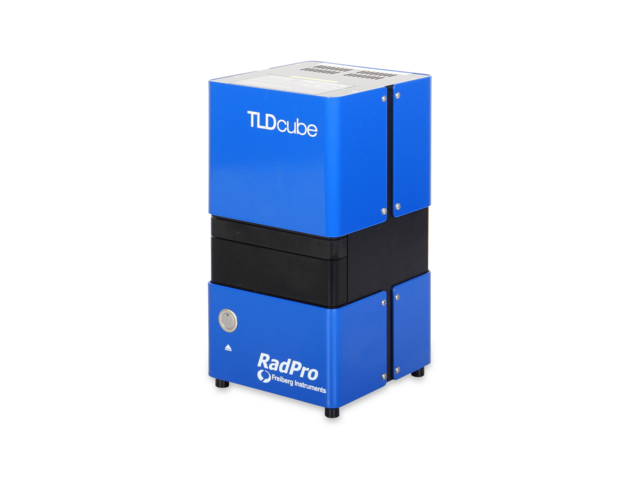
Skip breadcrumb navigation Breadcrumb Freiberg Instruments Products Luminescence Dating and Dosimetry TLDcube TLD cube A modern TLD reader by Freiberg Instruments Exclusively through RadPro International Contact for demo Product Sheet Skip menu Quick navigation Features Applications Specifications Software Contact Features & Benefits TLDcube is a small, lightweight and portable TLD Reader for measuring, analyzing and evaluating of thermoluminescent materials. The ceramic heater with defined nitrogen cooling in the rotating drawer accepts all standard TLD shapes Single element Measurement chamber (TL) End point temperature up to 600°C Photosensor (300 - 650 nm) Exchangeable detection filter Download Product Sheet PDF (292 KB) Applications Thermoluminescence (TL) Thermoluminescence (TL) is a backbone in radiation protection dosimetry with a long tradition and used for a wide range of dosimetric purposes, including accident dosimetry, retrospective… Learn more Neutron dosimetry Active dosimeters, like rem-mteters, superheated emulsions and electronic personal dosemeters can be used to measure neutron fields. But frequently passive dosemeters are used to determine… Learn more Food Irradiation Control Food stuff often is irradiated with ionizing radiation for sterilisation purposes. This requires the detection and estimates of the applied doses. The attached mineral dust or the food itself… Learn more Medical dosimetry Ionizing radiation from a large variety of isotopic sources, as well as accelerators, electron beams, etc. are increasingly used in radiotherapy. Clinical diagnostics employing ionizing radiation… Learn more Other applications: → Radiation protection → Personnel dosimetry → Environmental research → Experimental physics TLDcube – Exclusively through RadPro International This product is distributed by our trusted partner. Contact for demo Specifications Heater State-of-the-art ceramic contact heater with thermocouple Measurment chamber Sealed chamber with nitrogen circulation pump and cooling function Base plate Stainless steel, exchangeable Base plate (type) Chip 3.2 mm x 3.2 mm, Rod 1 mm x 6 mm, Disc Ø 4.5 mm, Multi-Purpose Ø 10 mm Powder dish Inner Ø 8 mm, outer Ø 10 mm Capacity Single element (one sample per load) Linear heating ramps Adjustable up to 20 K/s Heating program Multi-step program, adjustable temperatures ±1 K End point temperature up to 600°C Readout time Freely adjustable Accuracy ±1 % S.D. (for multiple readout) Stability Better than ±1% during 8 h operation Test light Stability < 0.5%, colour blue Detector Thermoelectric temperature stabilization Measurement range 7 decades Signal processing 24 bit, full digital evaluation system Neutral density filters Exchangeable Shielding and cooling gas Nitrogen, approx. 300 ml per measurement Software TLStudio - windows based software with full calibration and export functions Data output LAN to PC Power supply 100/240 V, 50-60 Hz Power consumption 200 VA Dimensions (W x D x H) 15 x 17 x 29 cm Weight ca. 5 kg Transport case 48 x 25 x 25 cm, 11 kg (incl. TLD Cube reader) All information are subject to technical changes without notice. Software TLStudio - Operating & Evaluation software User account management system, Transperent workflow, Professionally designed user interface, Intelligent parameter selection, Live data visualization, Easy programming of individual and… Learn more TLDcube – Exclusively through RadPro International This product is distributed by our trusted partner. Contact for demo
Page

Sustainability

Sustainability Driving Positive Impact for a Greener Tomorrow Our Commitment to Sustainability Sustainability is at the heart of Freiberg Instruments' philosophy. We believe in shaping a better future through responsible practices that benefit the environment, society, and our stakeholders. From reducing our environmental footprint to fostering social responsibility, we are committed to creating lasting value for our customers, employees, and communities. As part of this commitment, we are proud to hold an EcoVadis Bronze rating , a recognition of our ongoing efforts to enhance sustainability across all areas of our operations. This achievement is just the beginning, as we aim to reach the EcoVadis Gold standard by 2030. Actions That Make a Difference At Freiberg Instruments, we take tangible steps to ensure a sustainable future: Energy Efficiency Optimized energy-saving measures and the installation of solar panels on our facilities help us reduce carbon emissions. Sustainable Mobility E-charging stations for our hybrid and electric vehicle fleet reflect our focus on green transportation. Workplace Responsibility We prioritize high occupational health and safety standards to ensure the well-being of our employees. Diversity and Inclusion We foster equality, tolerance, and a supportive work environment for all team members. Our approach to sustainability extends to ethical business practices, responsible sourcing, and comprehensive training programs that empower our team to make a difference. Net Zero by 2040 With a clear roadmap, we aim to achieve net-zero operations by 2030 and extend this goal across our entire value chain by 2040. Along the way, we are committed to reducing our environmental footprint, fostering social responsibility, and driving meaningful innovation. Together, we can create a future that is both sustainable and impactful – for today and generations to come. Discover more Our people Learn more Quality and Certification Learn more News Learn more

Page

Surface Photovoltage Spectroscopy

Surface Photovoltage Spectroscopy Rapid, Contactless Analysis of Essential Electro-Optical Material Properties: The SPS/SPV series Surface Photovoltage Spectroscopy (SPS/SPV) is a proven technique for analyzing bulk, interface, and surface-related properties in electro-optical materials. Traditionally limited to specialized labs, commercial SPV solutions remain scarce, often restricted to niche applications. Freiberg Instruments’ HR-SPS platform redefines material characterization with high-resolution, contactless analysis for virtually any electro-optical material – from powder-based samples, nanoparticle structures to 300 mm silicon wafers. Designed for both production and research, it enables rapid, precise assessments for manufacturing and material innovation. With applications spanning defect characterization in semiconductors (silicon, silicon carbide, and wide-bandgap semiconductors like gallium oxide and diamond), charge dynamics analysis in photocatalysts (copper oxide and titanium oxide), and beyond, HR-SPS brings unparalleled versatility and efficiency to SPV analysis. SPS/SPV series HR-SPSmap with fixed energy excitation sources Learn more SPS/SPV series HR-SPSmap with variable energy excitation source Learn more Discover more of the SPS/SPV series Applications Learn more Technology Learn more Software Learn more Publications Learn more With HR-SPSmap, you can achieve precise and quick insights of your semiconductor and photoactive materials with advanced and contactless technology. Dr. Nadine Schüler Head of Research & Development Get in touch Do not hesitate to contact us – we are available to assist you with any inquiries or requests. Use our inquiry tool or reach out via email: sales @ freiberginstruments.com

Application

Study and monitoring of photocatalytic materials (TiO2)

Study and monitoring of photocatalytic materials (TiO2) Aim Photocatalytic materials such as TiO 2 are of great interest, for example, for cleaning of industrial wastewater and for water splitting. The identification of directed charge transfer is important for deeper understanding of the role of defect states, defect bands and doping as well as for technology control. Solution SPV spectroscopy in the dc (Kelvin probe, measurement of the contact potential difference, DCPD) and ac (modulated) modes provides information about preferential directed charge separation [1] and allows the investigation of the influence doping on band bending, recombination losses and scavengers (entities accepting electrons or holes) at surfaces. Application example It was shown that TiO 2 can be doped n- and p-type by thermal treatment in reducing or oxidizing atmosphere (figure 1, more in [2]). Figure 2 shows the deposition temperature dependence of defect and band gap transitions in TiO 2 after deposition by cold gas spraying of TiO 2 powder (more in [3]). The evolution of defect bands in TiO 2 caused by incorporation, of nitrogen and their effect on charge transfer was studied in [4]. References [1] Th. Dittrich, S. Fengler, “Surface photovoltage analysis of photoactive materials”, World Scientific, 2020. [2] M. K. Nowotny, et al., „Observation of p-type semiconductivity in titanium dioxide at room temperature”, Materials Letters 64 (2010) 928. [3] I. Hermann-Geppert, et al., „Cold gas sprayed TiO 2 -based electrodes for the photo-induced water oxidation”, ECS Transactions 58 (2014) 21. [4] R. Beranek, et al., „Exploring the electronic structure of nitrogen-modified TiO 2 photocatalysts through photocurrent and surface photovoltage studies”, Chem. Phys. 339 (2007) 11. Fig. 1: 1st (thick) and 2nd (thin) DCPD spectra of reduced (red) and oxidized (blue) TiO2 (rutile). Band gap and defect states marked. Data partially after [2]. Fig. 2: Modulated SPV spectra of cold gas sprayed TiO2 for different temperatures. Data partially after [3]. Related Solutions and Industries: Epitaxial Layers & Thin Films Matching Products SPS/SPV series HR-SPSmap with fixed energy excitation sources High-Resolution and Sensitive Surface Photovoltage Measurement Solutions Learn more SPS/SPV series HR-SPSmap with variable energy excitation source with a variable energy excitation source Learn more Get in touch Do not hesitate to contact us – we are available to assist you with any inquiries or requests. Use our inquiry tool or reach out via email: sales @ freiberginstruments.com

Technology

Static, transient or modulated light excitation pro and con

Static, transient or modulated light excitation pro and con The time-resolved or frequency-modulated, surface photovoltage spectroscopy (SPS) is based on a time-resolved/frequency modulated measurement of the spectral dependence of the surface photovoltage (SPV). It is a powerful non-destructive and contactless characterization method. It is mainly used to study the electronic transitions and optical properties of bulk materials, thin films and heterostructures. High sensitivity and the possibility of room temperature measurements are the key advantages of the SPV method. Another advantage is that there is no need for the preparation of a front contact on the investigated sample. In general, there is no need for preparing the sample for the measurement, allowing to investigate the sample under operation/process conditions in a wide temperature range under different atmospheric conditions. The information depth and thereby the possibility to extract bulk properties is limited by the lights penetration depth and the diffusion length. In comparison to other spectroscopic methods, such as but not limited to optical transmission, deep level transient spectroscopy, photoluminescence or Raman spectroscopy, the time-resolved/frequency modulated SPS or SPV (fixed wavelength) method is fast and uncomplicated and is thus an ideal tool for production floor decisions of sample quality. We distinguish between 3 different excitation modes, but common to all of them is that the relaxation aspect of states in the samples are resolved under ideal conditions. A static SPV measurement is sensitive to any fast or slow process that lead to the separation of photogenerated carriers in space. The sample is illuminated until a saturation of the SPV signal is observed, after which the light is switched of. Measuring 1) the static SPV signal and 2) the time-resolved relaxation time gives a lot of useful information about the state of the material. A SPV measurement that is performed under modulated illumination in a fixed capacitor arrangement is very sensitive to small changes in the SPV signal. And, only those SPV signals, which can follow the modulation frequency are contributing to the measured signal. The response of processes with relaxation times much longer than the modulation period are simply filtered out. The most sensitive SPV measurement that can be made is a transient measurement, where illumination pulse of different pulse width are followed by a time dependent measurement of the decay of the SPV signal – in this way charge separation distances in the nanometre range can be investigated. This is particular important for surface or tunnelling dominated processes in the material. Matching Products SPS/SPV series HR-SPSmap with fixed energy excitation sources High-Resolution and Sensitive Surface Photovoltage Measurement Solutions Learn more SPS/SPV series HR-SPSmap with variable energy excitation source with a variable energy excitation source Learn more DPM series DPM100 Wide range double prism monochromator Learn more Get in touch Do not hesitate to contact us – we are available to assist you with any inquiries or requests. Use our inquiry tool or reach out via email: sales @ freiberginstruments.com

Page

Spectrometry detection unit

Skip breadcrumb navigation Breadcrumb Freiberg Instruments Products Luminescence Dating and Dosimetry lexsygresearch Configuration options Spectrometry detection unit Spectrometry detection unit for IR and UV spectroscopy Interested? Get in touch! Contact now OE-CCD based high sensitivity spectrometry detection unit (Recommended for IR spectroscopy) fiber-coupled CCD based luminescence emission spectrometer TE-cooled (min. -80 °C) CCD-detector 200 – 1050 nm, 16 bit digitization easy change of gratings and wavelength re-calibration, one grating can be selected powerful spectrometry software integration into lexsyg measurement control software BU-CCD based high sensitivity spectrometry detection unit (Recommended for UV spectroscopy) 1024 x 255 Pixel, 26 μm back Illuminated BU 5 years guarantee of UltraVac vacuum sealing of CCD-chamber including software implementation high quality Non-Imaging spectrograph focal distance: 163 mm aperture ratio: 3.6 grate: 300 l/mm, Blaze 500 nm optical fiber: Custom fiber bundle UV-VIS, Overall length: 3 m +/-5 cm, Fiber count: 114 approx. adapter for manual gap and shutter flange with cylindrical lens for InGaAs-Detector variable gap for SR163: 10 μm-13 mm

Application

Spatially resolved luminescence

Spatially resolved luminescence Spatial differentiation of luminescence signals for mineral specific analysis and hot spot identification Measuring luminescence with EMCCD camera allows for the spatial differentiation of luminescence signals . Different minerals, mineral phases, radiation hot spots etc. can be determined in granular or solid samples and provide information on small scale differences of the radiation fields, or the material inhomogeneities (e.g. semiconductors). Greilich, S., Glasmacher U.A., Wagner G.A., 2005. Optical dating of granitic stone surfaces. Archaeometry 47, 645-665 Spatially resolved luminescence from a rock surface; A shows an optical microscopy image; B, the spatial distribution of the equivalent doses; C, the natural OSL signal; D, the regenerated OSL signal (from Greilich et al., 2005) Matching Products TL/OSL series lexsygresearch The most advanced TL/OSL reader Learn more Get in touch Do not hesitate to contact us – we are available to assist you with any inquiries or requests. Use our inquiry tool or reach out via email: sales @ freiberginstruments.com

Page

Solutions

Solutions Innovative solutions for your Automation and Metrology challenges We provide cutting-edge metrology solutions designed to tackle the most complex challenges in automation and materials characterization. Our state-of-the-art systems ensure precision, efficiency, and reliability across multiple high-tech industries. Crystal Growth and Processing Achieve unrivaled accuracy in crystal orientation and processing. Our advanced X-ray diffraction (XRD) systems optimize grinding and sawing processes, ensuring perfect alignment for high-performance semiconductor applications. Discover Epitaxial Layers & Thin Films Guarantee the highest standards in semiconductor front-end processes with precise thin-film characterization. Our non-destructive metrology tools provide critical insights into wafer properties, layer thickness, and defect detection. Discover Photovoltaic Maximize solar cell efficiency with our industry-leading metrology solutions. Our advanced tools support high-speed, high-accuracy analysis of wafers and thin films, ensuring optimal yield and production performance. Discover Luminescence Dating and Dosimetry Empowering researchers with high-precision luminescence dating tools for age determination and radiation exposure assessments. Our instruments provide unparalleled sensitivity and reliability in geochronology and dosimetry applications. Discover Radiation Monitoring Enhance workplace and environmental safety with cutting-edge radiation detection systems. Our solutions provide real-time monitoring, ensuring compliance and protection in critical industrial and research environments. Discover Research and Development Accelerate innovation with flexible, high-precision measurement solutions tailored for R&D applications. Our advanced metrology tools support material research, semiconductor development, and defect analysis with maximum accuracy. Discover R&D Projects We turn visionary ideas into measurable success. Our R&D projects showcase cutting-edge technologies and pioneering collaborations—whether in partnership with leading research institutions or within high-tech industries. Discover Our advanced metrology solutions enable industries to enhance efficiency, investigate defects & drive innovation—ensuring excellence in semiconductor manufacturing, photovoltaics & materials research. Ing. Thanga Kumar Sales Director Can't find the solution you're looking for? Do not hesitate to contact us – we are available to assist you with any inquiries or requests. Use our enquiry tool or reach out via email: sales@freiberginstruments.com Discover more Products Learn more Services Learn more Company Learn more