Found 271 results in 2 milliseconds.

Product

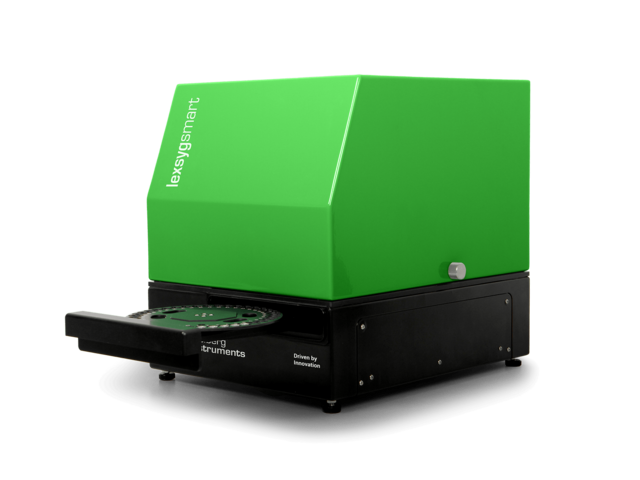
lexsygsmart

Skip breadcrumb navigation Breadcrumb Freiberg Instruments Products Luminescence Dating and Dosimetry lexsygsmart lexsyg smart The most sensitive TL/OSL reader Interested? Get in touch! Contact now Product Sheet Skip menu Quick navigation Features Applications Options Software Contact Features & Benefits Compact design: provides thermal and optical stimulation for up to 3 different wavelengths No crosstalk: independent operation of measurement chamber and sample changer ensures absence of stimulation and radiation crosstalk Flexibility: Software controlled switch of detection filters within a measurement sequence Homogeneity : highly homogeneous and stabilized optical stimulation provides identical measurement conditions Accessibility: IP based system allows remote operation and technical support from anywhere in the world Reference list – TL/OSL reader Applications Thermoluminescence (TL) Thermoluminescence (TL) is a backbone in radiation protection dosimetry with a long tradition and used for a wide range of dosimetric purposes, including accident dosimetry, retrospective… Learn more Photo/ Optically Stimulated Luminescence (PSL + OSL) Photostimulated Luminescence (PSL or POSL) is also called Optically Simulated Luminescence (OSL) and can be used for a wide range of dosimetric purposes. It is gaining importance in radiation… Learn more Neutron dosimetry Active dosimeters, like rem-mteters, superheated emulsions and electronic personal dosemeters can be used to measure neutron fields. But frequently passive dosemeters are used to determine… Learn more Food Irradiation Control Food stuff often is irradiated with ionizing radiation for sterilisation purposes. This requires the detection and estimates of the applied doses. The attached mineral dust or the food itself… Learn more Medical dosimetry Ionizing radiation from a large variety of isotopic sources, as well as accelerators, electron beams, etc. are increasingly used in radiotherapy. Clinical diagnostics employing ionizing radiation… Learn more Optically stimulated Luminescence dating of quartz (OSL) Age range, Few years (depending on signal intensity and sensitivity of equipment for which the lexsyg systems are especially developed), Up to ~150-200,000 years (depending on dosimetry),… Learn more Infrared stimulated Luminescence dating of feldspar (IRSL) Due to higher saturation doses the age range is larger than for OSL, Internal dose rates in K-feldspar reduce dependency on external dose rate and water content, Might suffer from an anomalous… Learn more Pulsing: mixed mineral samples Sometimes mineral separation in sediment or solid samples is not possible (polymineral samples), especially in cases of intergrowth of minerals. Pulsing (i.e. short light stimulation) the… Learn more Flint and other heated rocks Rocks containing amorphous/microcrystalline SiO2 can be dated by luminescence methods when they have been heated to approximately 400°C. Such temperatures, whether accidentally or deliberately,… Learn more Ceramics, pottery, bricks and statues While the typology of ceramics is a backbone of many archaeological chronologies, establishing the age directly for certain types of ceramics is sometimes required. Optically Stimulated… Learn more Unheated rock surfaces Granite or other quartz/feldspar containing rocks are preferentially dated with spatially resolved luminescence, Marble, limestone surfaces are dated with Optically Stimulated Luminescence (OSL)… Learn more Sediment dating Optically Stimulated Luminescence (OSL, TT-OSL) dating of quartz grains from sediments, Infrared Stimulated Luminescence (IRSL, pIRIR, IR-RF) dating of feldspar grains from sediments, Trench… Learn more Interested? Our experts are happy to assist you. Get in touch! Contact us now! Accessories & Options Configuration options Irradiation sources Thermal stimulation (TL) Pulsed OSL (10 µs) Red stimulated quartz OSL Filter wheel PMT detection unit Optional accessories Additional sample carousel Sample cups/discs Aliquot preparation kit LED head lamp Air compressor Software LexStudio 2.0 - Operating software Modern, professionally designed user interfacensitivity: Based on user feedback a new graphical user interface which combines clear arrangement and usability is developed by Freiberg… Learn more LexEva - Evaluation software LexEva is a newly released evaluation software developed for analysis in luminescence research and dating. LexEva was adapted to the "Luminescence" package developed by the R. Luminescence… Learn more TLStudio - Operating & Evaluation software User account management system, Transperent workflow, Professionally designed user interface, Intelligent parameter selection, Live data visualization, Easy programming of individual and… Learn more Get in touch Do not hesitate to contact us – we are available to assist you with any inquiries or requests. Use our inquiry tool or reach out via email: sales @ freiberginstruments.com

Application

Sediment dating

Sediment dating When sediments cover an archaeological site they are exposed to light and the mineral grains are bleached.Such events can be dated by luminescence methods and the age employed to determine the age of an archaeological site through its related sedimen Optically Stimulated Luminescence (OSL, TT-OSL) dating of quartz grains from sediments Infrared Stimulated Luminescence (IRSL, pIRIR, IR-RF) dating of feldspar grains from sediments Trench sediment filling with OSL/IRSL With a suite of stimulation wavelengths the lexyg devices provide an all in one solution for many sediment and mineral types Profile of ice wedge in fine grained sediments suitable for Luminescence dating (photo Richter). Matching Products TL/OSL series lexsygsmart The most sensitive TL/OSL reader Learn more TL/OSL series lexsygresearch The most advanced TL/OSL reader Learn more Get in touch Do not hesitate to contact us – we are available to assist you with any inquiries or requests. Use our inquiry tool or reach out via email: sales @ freiberginstruments.com

Application

Tooth enamel and quartz grains

Tooth enamel and quartz grains Archaeological sites often contain teeth from animals or humans or the site is contained in quartz bearing sediment. The enamel can be dated with Electron Spin Resonance (ESR/EPR), but it is often required to combine this method with U-series dating. Tooth enamel to date an archaeological site Quartz grains to date the sedimentation which covers a site or is related to the archaeology Magnettech's high sensitivity ESR spectrometer MS 400 and MS 5000 Bahain, J.-J., Falgueres, C., Laurent, M., Voinchet, P., Dolo, J.-M., Antoine, P., and Tuffreau, A. (2007). ESR chronology of the Somme River Terrace system and first human settlements in Northern France. Quaternary Geochronology 2, 356-362. Voinchet, P., Despriée, J., Tissoux, H., Falguères, C., Bahain, J. J., Gageonnet, R., Dépont, J., and Dolo, J. M. (2010). ESR chronology of alluvial deposits and first human settlements of the Middle Loire Basin (Region Centre, France). Quaternary Geochronology 5, 381-384. ESR spectrum of gamma irradiated horse enamel from the Middle Palaeolithic archaeological site of Piégu (France) measured with a MiniScope MS 5000 benchtop ESR spectrometer (sample courtesy J.-J. Bahain, Muséum National d’Histoire Naturelle, Paris) Get in touch Do not hesitate to contact us – we are available to assist you with any inquiries or requests. Use our inquiry tool or reach out via email: sales @ freiberginstruments.com

Application

Unheated rock surfaces

Unheated rock surfaces The last light exposure of rock surfaces can be dated for establishing the age of e.g. the construction and destruction of walls Granite or other quartz/feldspar containing rocks are preferentially dated with spatially resolved luminescence Marble, limestone surfaces are dated with Optically Stimulated Luminescence (OSL) as well as Thermoluminescence (TL) Spatially resolved luminescence is especially useful in this application with e.g. EMCCD-camera in lexsyg detector changer Greilich S & Wagner GA (2006) Development of a spatially resolved dating technique using HR-OSL. Radiation Measurements 41, 738-743. IRSL dating of the light exposure due to turning over of rocks which created the Nasca lines (Greilich & Wagner, 2006) Matching Products TL/OSL series lexsygsmart The most sensitive TL/OSL reader Learn more TL/OSL series lexsygresearch The most advanced TL/OSL reader Learn more Get in touch Do not hesitate to contact us – we are available to assist you with any inquiries or requests. Use our inquiry tool or reach out via email: sales @ freiberginstruments.com

Application

Ceramics, pottery, bricks and statues

Ceramics, pottery, bricks and statues Optically Stimulated Luminescence (OSL) as well as Thermoluminescence (TL) can be applied to heated objects made from clay. While the typology of ceramics is a backbone of many archaeological chronologies, establishing the age directly for certain types of ceramics is sometimes required. Optically Stimulated Luminescence (OSL) as well as Thermoluminescence (TL) can be applied to heated objects made from clay. Ceramic/pottery dating to establish chronologies or the age of a site Brick dating to provide detailed insight into building histories Statues made of pottery or their clay core for the manufacturing date Authenticity dating of ceramic objects, pottery or statues to determine if objects are fake Reproducibility of multiple aliquot procedures is enhanced by lexsyg heater plate performance Barnett SM (2000) Luminescence dating of pottery from later prehistoric Britain. Archaeometry 42: 431-457 Lamothe M (2004) Optical dating of pottery, burnt stones, and sediments from selected Quebec archaeological sites. Canadian Journal of Earth Sciences 41: 659-667 Bouquillon A, Zink A & Porto E (2010) The Louvre Tanagras in the light of scientific analysis. Authenticity, Materials, Provenances. In: Jeammet V (Ed. Tanagras -Figurines for life and eternity - The musee du louvre's collection of greek figurines. 286-309, Fundacion Bancaja Valencia TL dating of non-diagnostic ceramics compared to fabric/typological context estimates (from Barnett 2000) Matching Products TL/OSL series lexsygsmart The most sensitive TL/OSL reader Learn more TL/OSL series lexsygresearch The most advanced TL/OSL reader Learn more Get in touch Do not hesitate to contact us – we are available to assist you with any inquiries or requests. Use our inquiry tool or reach out via email: sales @ freiberginstruments.com

Application

Flint and other heated rocks

Flint and other heated rocks When rocks have been heated in antiquity the time of the last exposure to high temperatures can be determined Rocks containing amorphous/microcrystalline SiO 2 can be dated by luminescence methods when they have been heated to approximately 400°C. Such temperatures, whether accidentally or deliberately, are easily achieved in hearths and therefore the dated event relates to the heating of the flint in a prehistoric fire. Quartz pebbles or sandstone with Optically Stimulated Luminescence (OSL) Flint, chert, hornstone, sandstone, quartz pebbles with Thermoluminescence (TL) Establishing chronostratigraphies for the Palaeolithic period (e.g. Valladas et al., 2013) Applicable for almost the entire time span of human use of fire Overview with specific application details for heated flint can be found in Richter (2007) Orange-red TL detection allows the use of SAR protocols with increased performance of red-enhanced PMT in lexsyg devices Richter D (2007) Advantages and limitations of thermoluminescence dating of heated flint from Paleolithic sites. Geoarchaeology 22, 671-683. Valladas H, Mercier N, Hershkovitz I, Zaidner Y, Tsatskin A, Yeshurun R, Vialettes L, Joron J-L, Reyss J-L & Weinstein-Evron M (2013) Dating the Lower to Middle Paleolithic transition in the Levant: A view from Misliya Cave, Mount Carmel, Israel. Journal of Human Evolution 65, 585-593. For heated flint dating the sum of the regression results of additive and regeneration TL growth curves provide the palaeodose TL glow curves detected in the orange-red wavelength band on a lexsyg research with standard bi-alkaline and red-enhanced photomultiplier tubes. (Note: these fine grain quartz aliquots were very reproducible and no normalisation was required) Matching Products TL/OSL series lexsygsmart The most sensitive TL/OSL reader Learn more TL/OSL series lexsygresearch The most advanced TL/OSL reader Learn more Get in touch Do not hesitate to contact us – we are available to assist you with any inquiries or requests. Use our inquiry tool or reach out via email: sales @ freiberginstruments.com

Application

Pulsing: mixed mineral samples

Pulsing Pulsing the stimulation allows the separation of quartz and feldspar luminescence signals for dating of mixed mineral samples Sometimes mineral separation in sediment or solid samples is not possible (polymineral samples), especially in cases of intergrowth of minerals. Pulsing (i.e. short light stimulation) the stimulation employs the different decay times of luminescence signals from different minerals in order to detect the luminescence signal predominately from a single mineral. Separate luminescence signals from different minerals Avoid tedious sample preparation See also spatially resolved luminescence Denby PM, Botter-Jensen L, Murray AS, Thomsen KJ & Moska P (2006) Application of pulsed OSL to the separation of the luminescence components from a mixed quartz/feldspar sample. Radiation Measurements 41, 774-779. Feathers JK, Casson MA, Schmidt AH & Chithambo ML (2012) Application of pulsed OSL to polymineral fine-grained samples. Radiation Measurements 47, 201-209. Luminescence decay of quartz and feldspar signals (from Denby et al., 2006) Matching Products TL/OSL series lexsygsmart The most sensitive TL/OSL reader Learn more TL/OSL series lexsygresearch The most advanced TL/OSL reader Learn more Get in touch Do not hesitate to contact us – we are available to assist you with any inquiries or requests. Use our inquiry tool or reach out via email: sales @ freiberginstruments.com

Application

Electron Spin Resonance (ESR) dating of quartz

Electron Spin Resonance Sedimentation ages can be established for quartz During long transport in fluvial systems the ESR (EPR) signal in quartz grains is sufficiently reduced to allow the determination of the age of sedimentation. Reconstruction of river systems Dating of terraces Determination of glacial cycles Age of faunal assemblages when applied to tooth enamel Voinchet P, Despriée J, Tissoux H, Falguères C, Bahain JJ, Gageonnet R, Dépont J & Dolo JM (2010) ESR chronology of alluvial deposits and first human settlements of the Middle Loire Basin (Region Centre, France). Quaternary Geochronology 5, 381-384. ESR dating results of river terraces (from Voinchet et.al., 2010) Get in touch Do not hesitate to contact us – we are available to assist you with any inquiries or requests. Use our inquiry tool or reach out via email: sales @ freiberginstruments.com

Application

Radiofluorescence

Radiofluorescence A technique for dosimetric dating of potassium feldspar to establish sedimentation ages. Infrared-Radiofluorescence (IR-RF) is a technique for dosimetric dating of potassium feldspar to establish sedimentation ages. This method avoids some of the problems of other trapped-charge techniques, which employ the signal from recombination, by measuring the IR-signal from an electron capture at luminescence traps during ionization. High saturation dose allows dating up to ca. 600 ka No fading or electron competition Simple single-aliquot regenerative (IR-SAR) procedure (Krbetschek & Erfurt 2003) Buylaert JP, Jain M, Murray AS, Thomsen KJ & Lapp T (2012) IR-RF dating of sand-sized K-feldspar extracts: A test of accuracy. Radiation Measurements 47, 759-765. Erfurt G & Krbetschek MR (2003) IRSAR - A single-aliquot regenerative-dose dating protocol applied to the infrared radiofluorescence (IR-RF) of coarse-grain K-feldspar. Ancient TL 21, 35. Wagner GA, Krbetschek M, Degering D, Bahain J-J, Shao Q, Falguères C, Voinchet P, Dolo J-M, Garcia T & Rightmire GP (2010) Radiometric dating of the type-site for Homo heidelbergensis at Mauer, Germany. Proceedings of the National Academy of Sciences 107, 19726-19730. IR-RF ages (squares) being in agreement with ESR-US ages (circles) for sands from the type locality of Homo heidelbergensis (from Wagner et al., 2010) Matching Products TL/OSL series lexsygresearch The most advanced TL/OSL reader Learn more Get in touch Do not hesitate to contact us – we are available to assist you with any inquiries or requests. Use our inquiry tool or reach out via email: sales @ freiberginstruments.com

Application

Single grain/spatially resolved luminescence dating

Spatially resolved luminescence Single grain dating for mixed sediments or heterogenous radiation fields Not every grain in a sediment sample reflects the same last bleaching and burial history. By analysing single mineral entities (whether grains or parts of it) different dose populations can be distinguished and models derived for different events of e.g. beaching or deposition. Single grain detection through spatially resolved luminescence Measurement of single grains Detection of bioturbation and mixing Differentiation of sedimentation components, like rock erosion versus aeolian Spatial analysis of heterogeneous samples, e.g. with mineral intergrowth Related topic: Unheated rock surfaces Chauhan N, Adhyaru P, Vaghela H & Singhvi AK (2014) EMCCD based luminescence imaging system for spatially resolved geo-chronometric and radiation dosimetric applications. Journal of Instrumentation 9, P11016. Greilich S & Wagner GA (2006) Development of a spatially resolved dating technique using HR-OSL. Radiation Measurements 41, 738-743. Olko P, Czopyk L, Klosowski M & Waligórski MPR (2008) Thermoluminescence dosimetry using TL-readers equipped with CCD cameras. Radiation Measurements 43, 864-869. False colour spatially resolved luminescence of the first 2 seconds of blue stimulated luminescence from quartz grains, detected with a lexsyg research Matching Products TL/OSL series lexsygresearch The most advanced TL/OSL reader Learn more Get in touch Do not hesitate to contact us – we are available to assist you with any inquiries or requests. Use our inquiry tool or reach out via email: sales @ freiberginstruments.com